
Water taxi | James Bond
Boat name
Make and type
Dimensions LxWxH
Year of construction
Type of project
Motorisation
Battery pack
Charger
Monitoring
Integration
3kW
1kW
10kW
The Ship
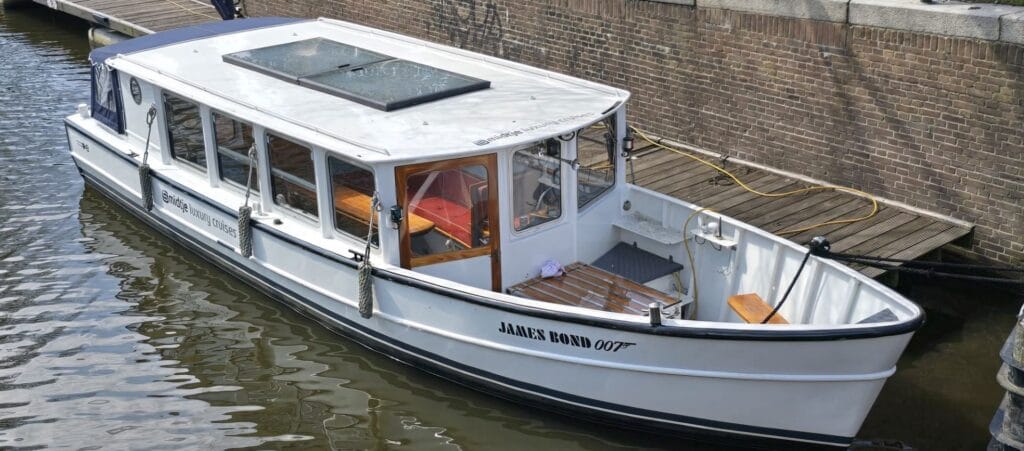
The James Bond is a former Amsterdam water taxi dating from 1990. The vessel was originally built for high-frequency passenger transport in the city centre, with speed, manoeuvrability and reliability being key priorities.
Over the years, the boat has had various operators, including Kinboats and, later, Smidtje Luxury Cruises. The vessel is now owned by Captain Dave Amsterdam and is used as an electric tour boat for small groups.
The hull is sleek and relatively light, with a low superstructure, making the vessel suitable for Amsterdam’s canals and low bridges.
Replacement of the traction pack
The existing traction system had reached the end of its technical and economic life. Instead of carrying out a partial replacement, it was decided to completely modernise the high-voltage system.
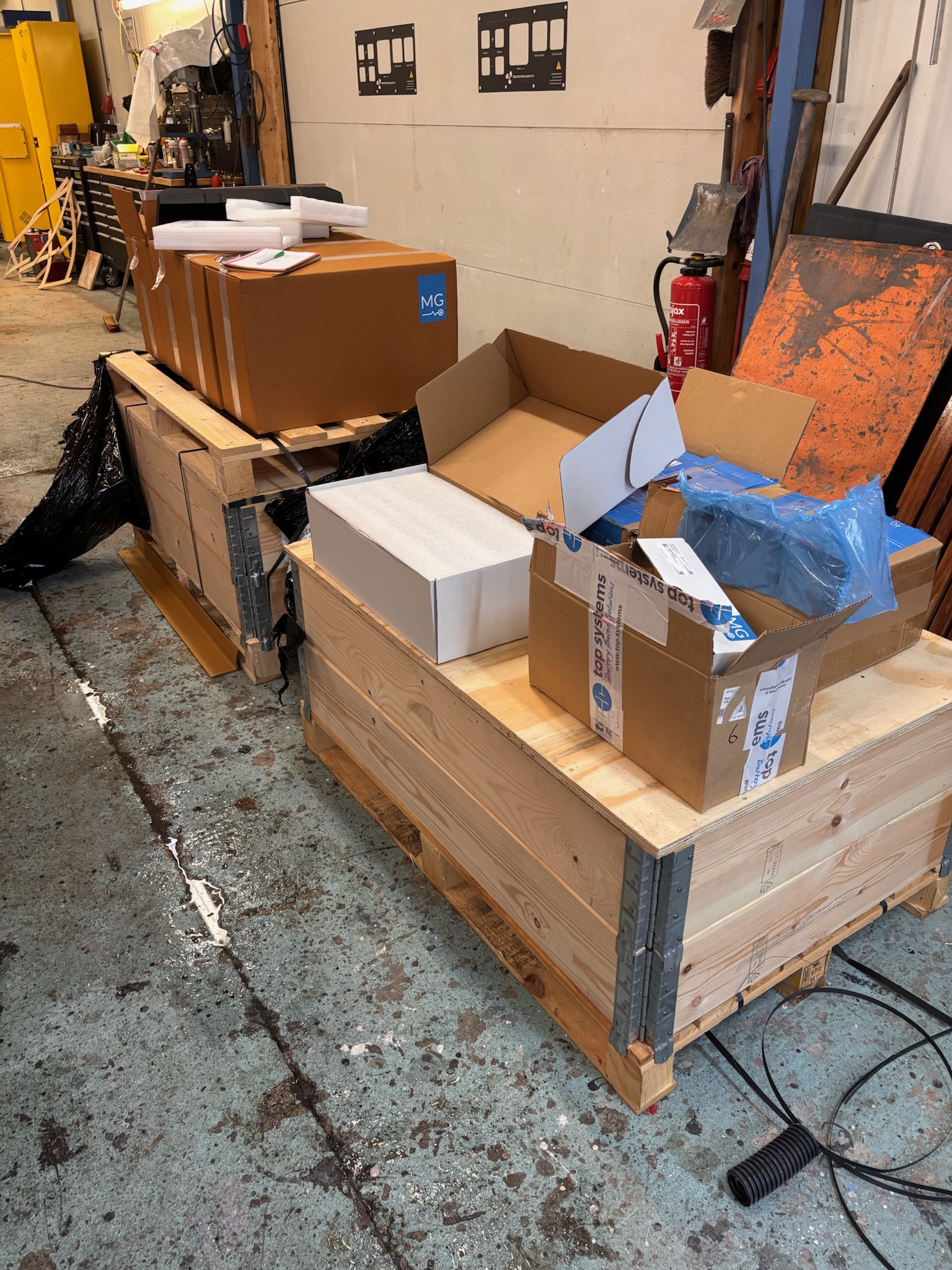
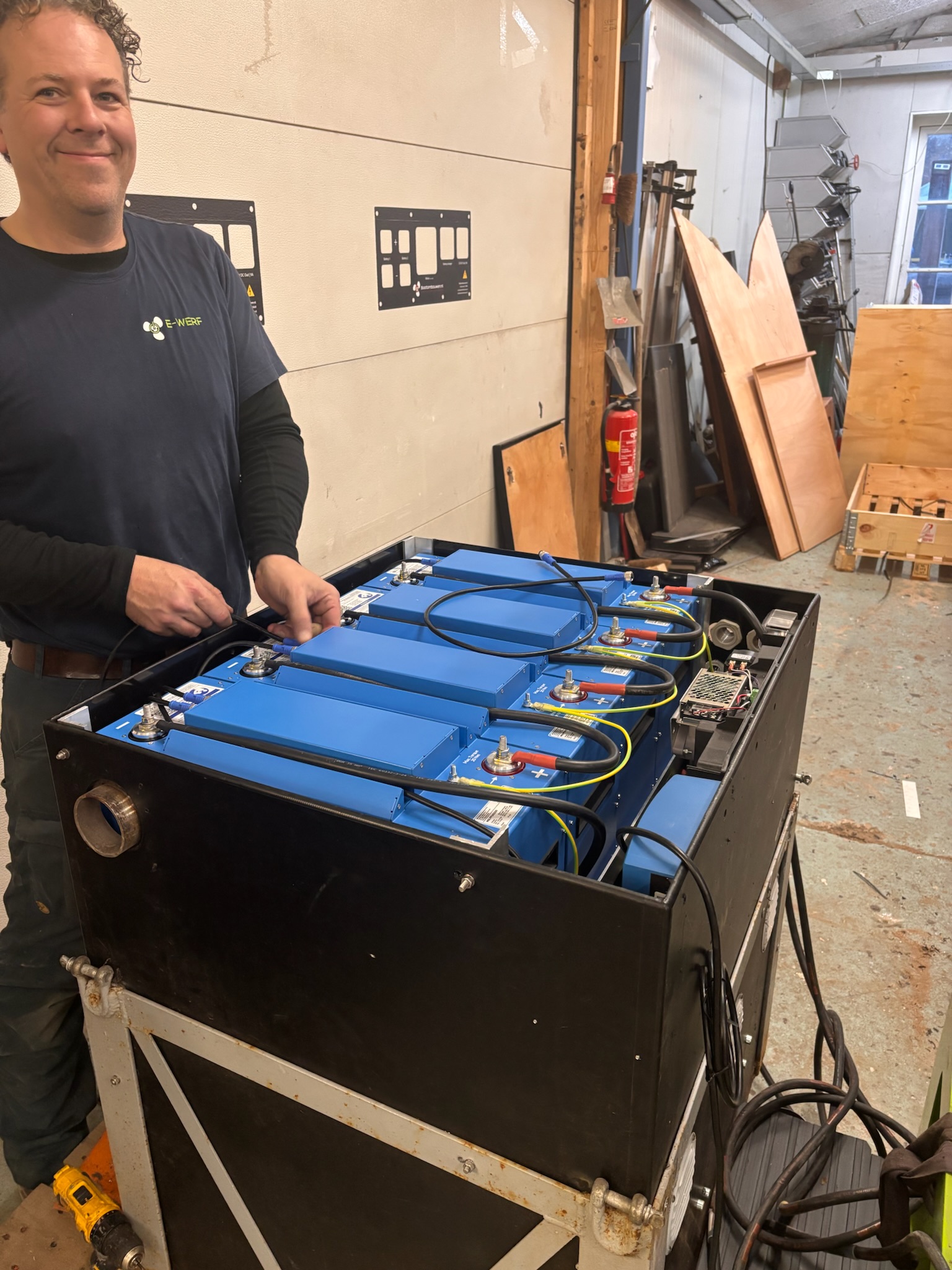
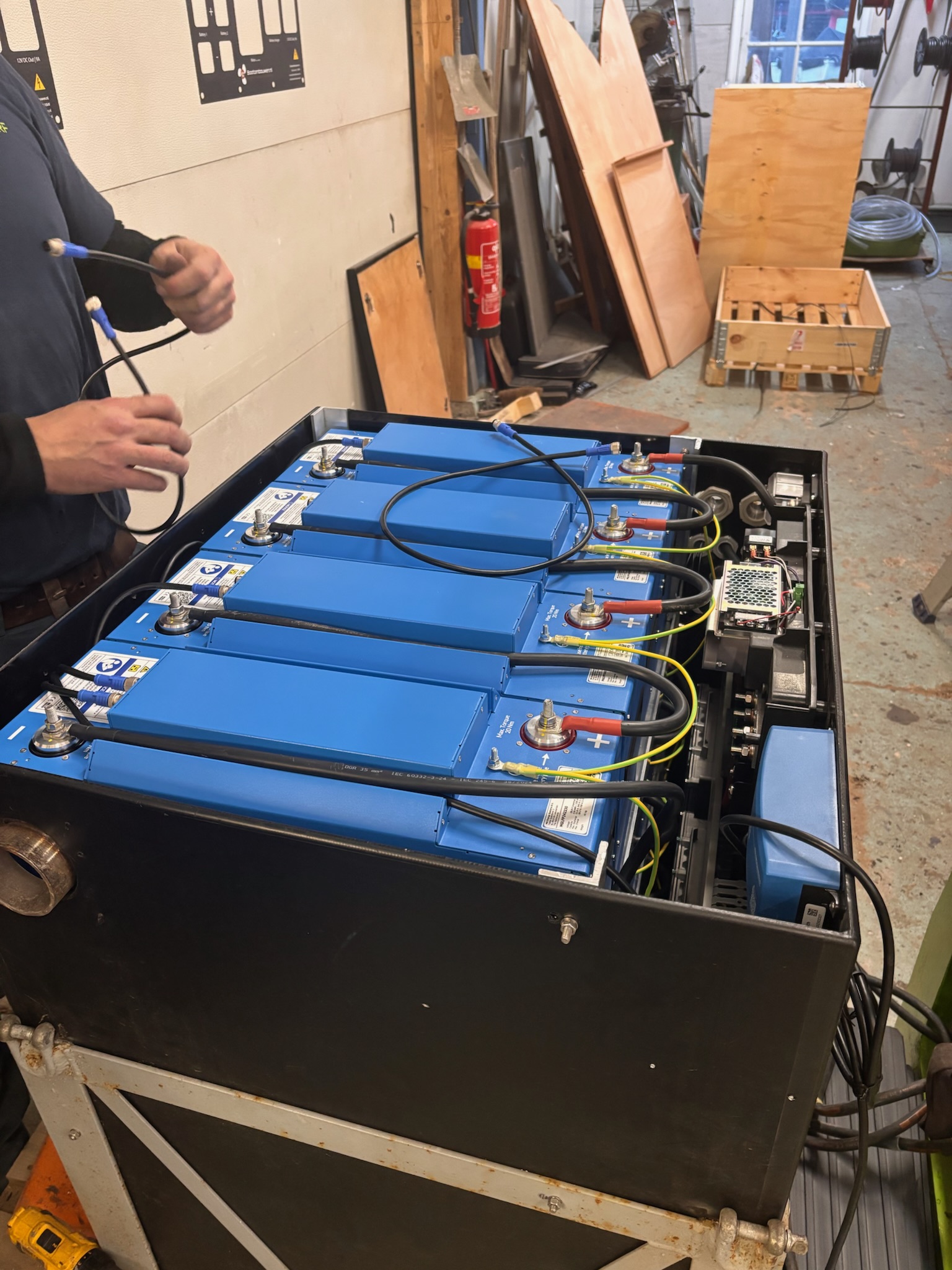
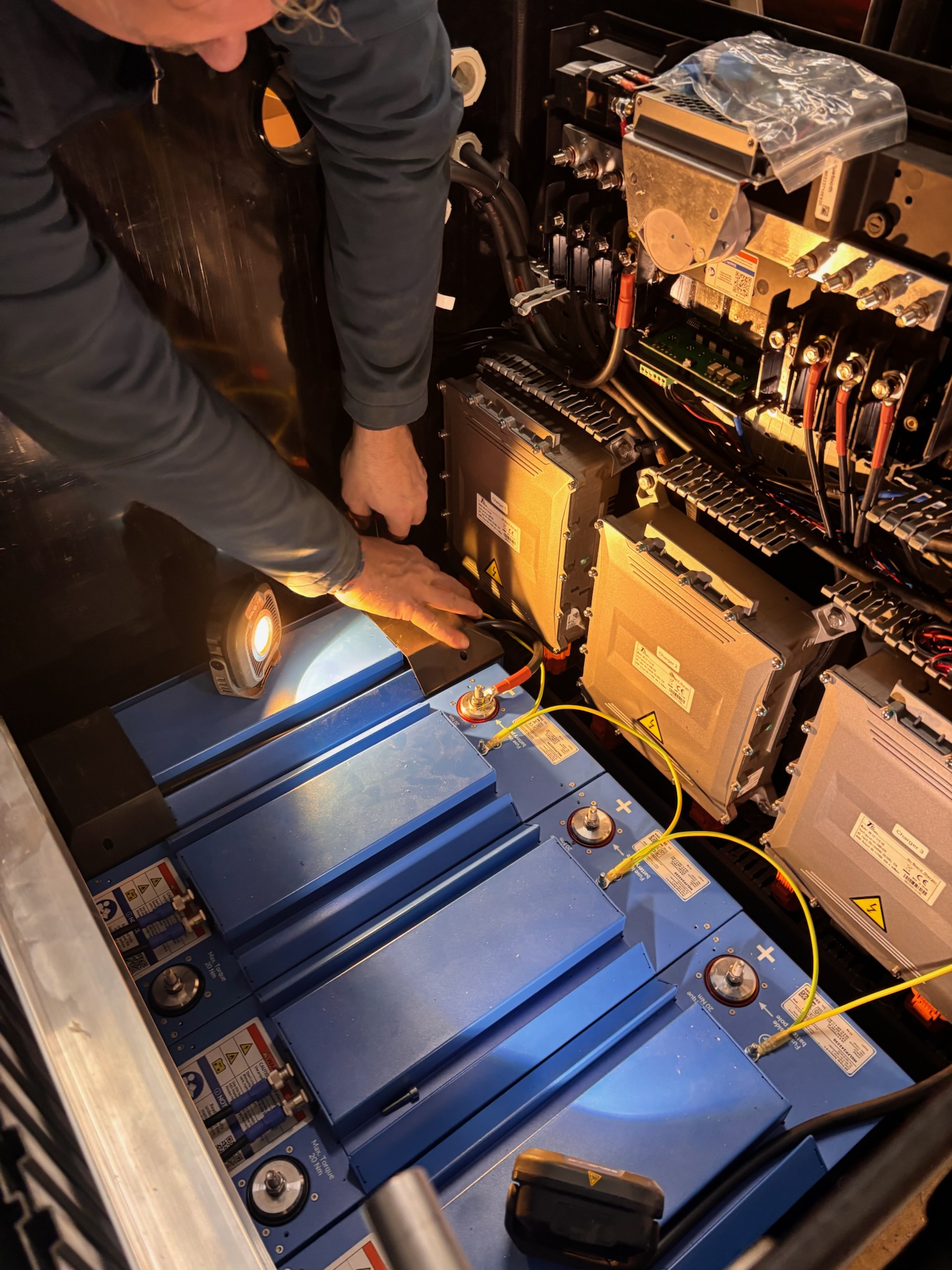
The old battery pack has been completely removed and replaced with a high-voltage lithium battery pack from MG Energy Systems. The new system has a nominal voltage of 96 VDC and a total capacity of 70 kWh. This means the vessel is once again capable of operating for a full day in the sightseeing cruise sector.
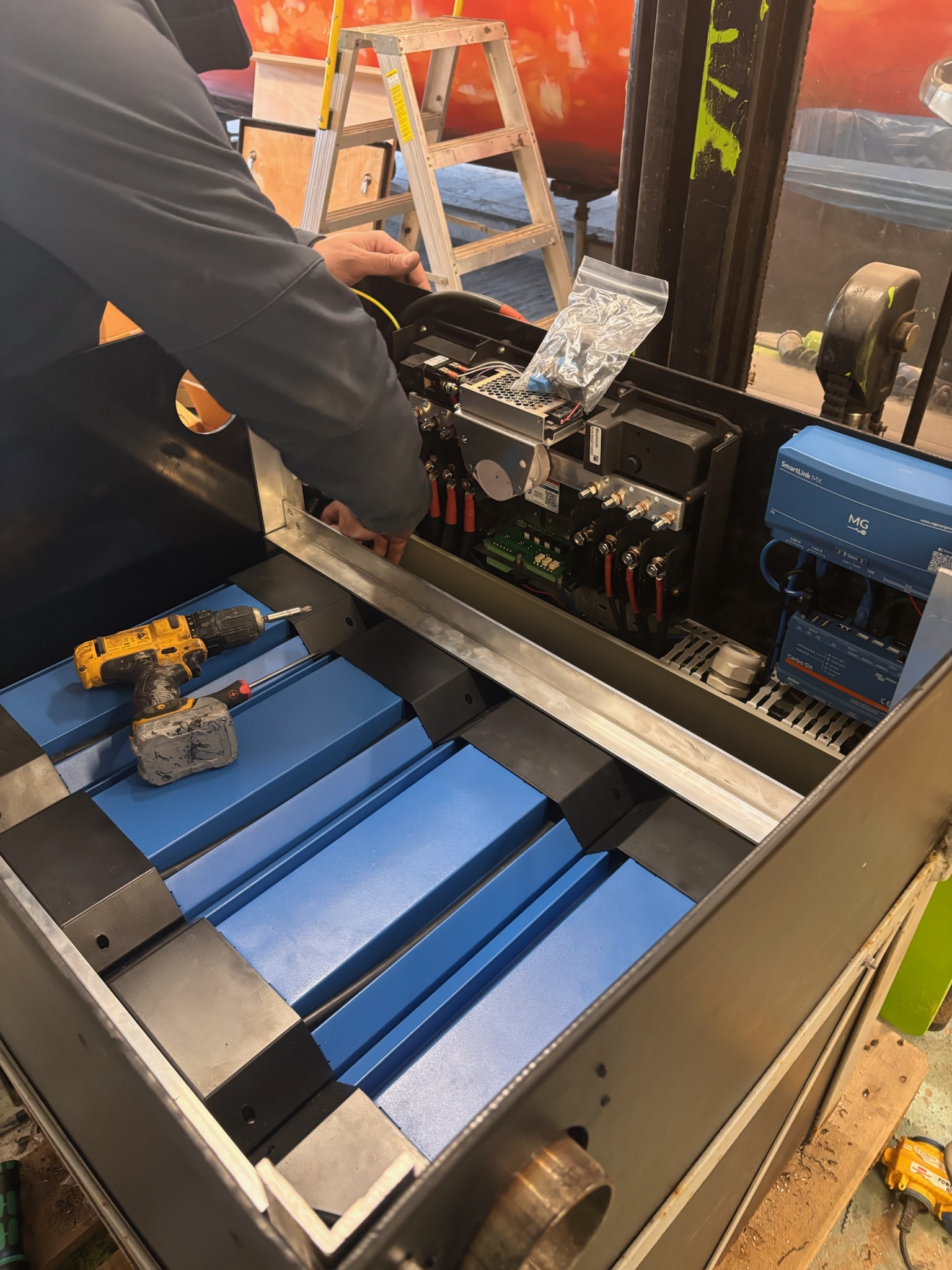
A key part of the project was the mechanical integration. We developed a new structure that allowed the lithium modules to be fitted into the existing battery compartment. This meant that the original position within the vessel was retained, which is beneficial for weight distribution and stability. No major hull modifications were required.
Charging infrastructure
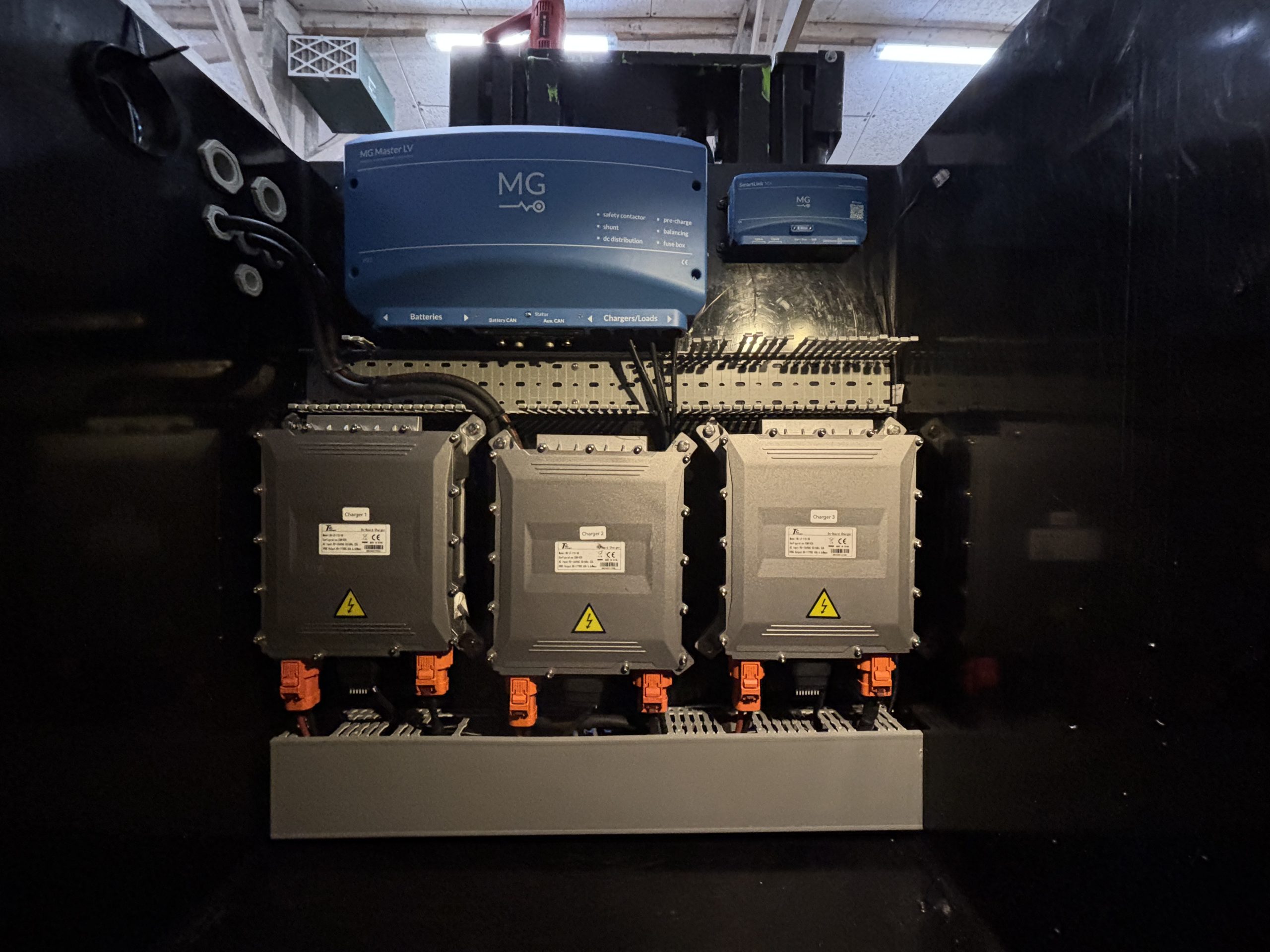
To enhance the vessel’s operational flexibility, a high-performance charging system has been selected. Three chargers, each with a capacity of 6,600 W, have been installed. Together, these provide a charging capacity of almost 20 kW via a high-voltage connection.
This allows for substantial recharging between voyages, enabling the vessel to be fully operational again in a relatively short time. The charging system is designed to work with the 96V traction package and is integrated into the overall on-board energy system, including safety and monitoring functions.
Drive system and electrical modifications
The existing electric motor has been retained but recalibrated to the new system voltage of 96 VDC. This was necessary to make the most of the available power and efficiency within the new voltage range.
In addition, the motor’s phase cables have been replaced. The new cabling has been selected to accommodate the increased power output and associated currents, ensuring that heat generation and voltage drop remain within safe limits.
The monitoring system has also been updated. Both the high-voltage system and the charging installation are continuously monitored, providing insight into consumption, charging status and system condition.
Upgrade of the on-board system
In addition to the traction system, the rest of the on-board power system has also been upgraded. A new 24 VDC main battery has been installed to power the on-board electrical equipment.
In addition, a new inverter/charger has been installed, ensuring that shore power, charging and the 230V supply are better coordinated.
Comfort and usability aspects have also been addressed, including new dimmable lighting and a new heater. This has modernised not only the propulsion system but the ship’s entire electrical system.
Result
This project involved a comprehensive technical upgrade, not just a simple battery replacement. The high-voltage system, the charging system, the motor control system and the on-board system were all rebuilt as a single integrated unit and fine-tuned to work together.
With a 70 kWh 96V lithium traction battery pack and a charging capacity of almost 20 kW, the James Bond is once again ready for intensive use in Amsterdam city centre. At the same time, the vessel has been technically simplified and prepared for long-term electric operation.